For anyone running or planning a reselling business, one of the most important decisions is where to sell. Should you rely on established marketplaces that already attract millions of customers, or invest in building your own website where you control everything?
This choice shapes the future of your business. It influences visibility, profit margins, branding, customer relationships, and long-term scalability. Many resellers begin on marketplaces because they offer instant access to buyers, but as businesses grow, the question of independence becomes unavoidable.
In the era of digital commerce and influencer marketing, the platform you choose also affects how effectively you can promote products, collaborate with creators, and build a loyal community.
There is no universal answer because each model offers distinct advantages and limitations. Understanding these differences will help you choose the path that aligns with your goals, resources, and growth strategy.
Understanding the Marketplace Model
Online marketplaces function as large digital shopping centers where multiple sellers list their products. Customers visit these platforms because they trust the brand, appreciate the convenience, and enjoy comparing options in one place.
For new resellers, marketplaces provide immediate exposure without requiring extensive marketing. Instead of building traffic from scratch, you benefit from an existing customer base actively searching for products.
This accessibility lowers the barrier to entry. You can start selling quickly, test demand, and learn how the business works before making larger investments.
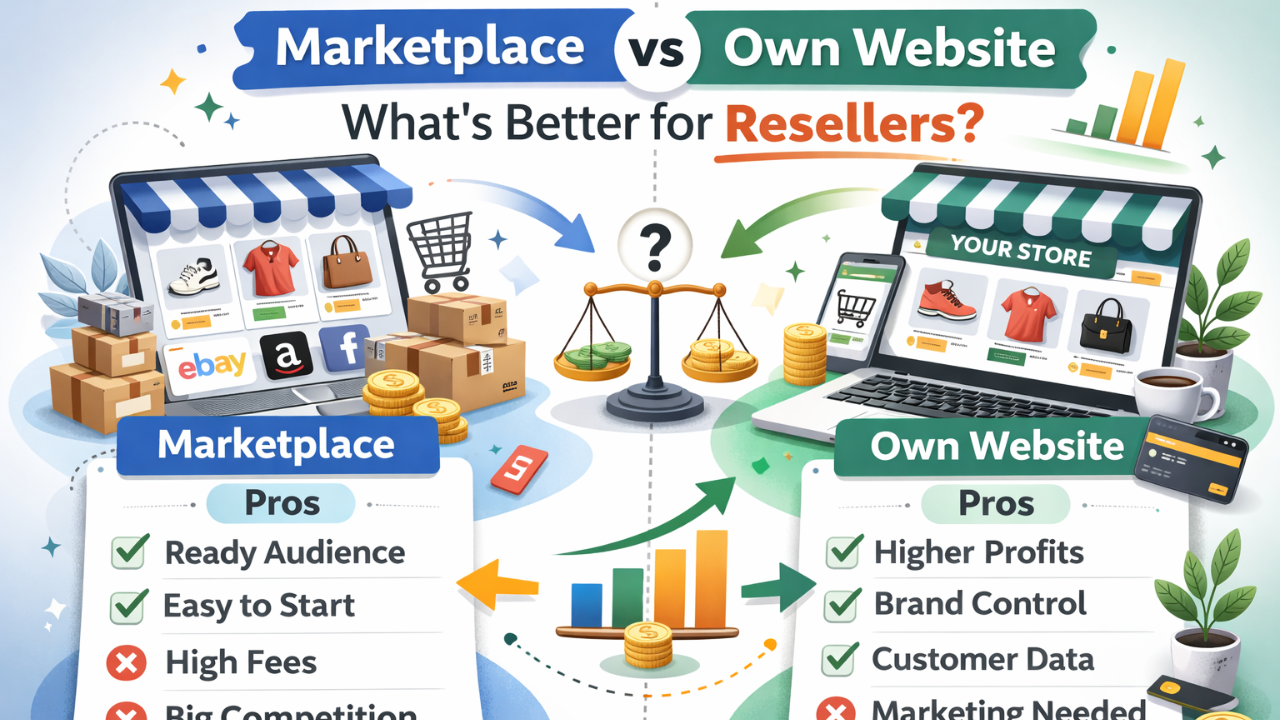
However, convenience comes at a cost. Marketplaces typically charge fees for listings, transactions, and advertising. Over time, these expenses can significantly reduce profit margins.
Another limitation is branding. On a marketplace, your store is just one among many. Customers may remember the platform more than the individual seller, making it difficult to build long-term loyalty.
Advantages of Selling on Marketplaces
Marketplaces excel in visibility. They attract high traffic volumes, which increases the likelihood of sales even for new sellers. This exposure is especially valuable for resellers who lack marketing experience or advertising budgets.
Trust is another major advantage. Customers often feel more secure purchasing through well-known platforms because of buyer protection policies and streamlined return processes.
Operational simplicity also appeals to beginners. Payment processing, logistics integrations, and customer support systems are often built into the platform, reducing technical complexity.
For resellers looking for quick entry into eCommerce, marketplaces provide a practical starting point.
Limitations of Marketplace Dependence
While marketplaces offer convenience, reliance on them creates vulnerability. Policy changes, fee increases, or algorithm adjustments can impact visibility and profitability overnight.
Competition is intense because many sellers offer similar products. Price wars are common, forcing resellers to lower margins to remain competitive.
Customer relationships are also limited. Marketplaces often restrict direct communication and access to customer data, making it difficult to build a brand community.
Over time, these constraints can hinder growth and independence.
Building Your Own Website: The Independent Approach
An independent website represents ownership and control. It allows you to design your store exactly as you envision, create a unique brand identity, and establish direct relationships with customers.
Unlike marketplaces, your website is not surrounded by competitors. Visitors focus solely on your offerings, which strengthens brand recognition and loyalty.
Owning a website also provides access to valuable data about customer behavior. These insights enable personalized marketing, targeted promotions, and improved decision-making.
However, independence requires effort. You must attract traffic, manage technical aspects, and handle marketing campaigns. Without visibility, even the most beautiful website will struggle to generate sales.
Advantages of Having Your Own Website
A personal website offers freedom. You control pricing, branding, product presentation, and customer experience without external restrictions.
Profit margins are often higher because you avoid marketplace commissions. Over time, these savings can significantly increase revenue.
Your website also becomes a long-term asset. As your brand grows, it gains value independent of any platform. Customers who trust your store are more likely to return, reducing reliance on paid advertising.
Influencer marketing works particularly well with independent websites. Creators can direct their audiences to a branded destination, strengthening credibility and conversion rates.
Challenges of Running Your Own Website
The biggest challenge is generating traffic. Without an existing audience, attracting visitors requires consistent marketing efforts such as search engine optimization, social media promotion, and paid advertising.
Technical management can also be demanding. Website maintenance, security updates, and performance optimization require time and expertise.
Customer trust must be built gradually. Unlike established marketplaces, new websites must prove reliability through reviews, policies, and transparent communication.
Despite these challenges, the long-term benefits often outweigh the initial difficulties.
The Role of Influencer Marketing in Both Models
Influencer marketing bridges the gap between marketplaces and independent websites. Collaborations with creators can drive traffic, increase awareness, and build trust regardless of where you sell.
For marketplace sellers, influencers can help differentiate your store from competitors. For website owners, they can accelerate brand recognition and customer acquisition.
Authentic partnerships work best because audiences respond to genuine recommendations rather than overt advertising.
Choosing the Right Model for Your Business Stage
The decision between marketplace and website often depends on your current stage. Beginners may benefit from marketplaces because they provide immediate exposure and learning opportunities.
As the business grows, transitioning to an independent website can unlock greater control and profitability. Many successful resellers eventually operate on both channels, combining the reach of marketplaces with the brand strength of their own platforms.
This hybrid approach reduces risk while maximizing opportunities.
Long-Term Vision: Control vs Convenience
Ultimately, the choice reflects your long-term vision. If your goal is quick sales with minimal setup, marketplaces offer convenience. If your ambition is to build a recognizable brand with loyal customers, an independent website provides the foundation.
Convenience supports short-term growth, while control supports long-term sustainability.
Final Thoughts
Marketplace and independent website models each offer unique advantages, and neither is universally superior. The best option depends on your goals, resources, and willingness to invest in growth.
Successful resellers often start where entry is easiest and evolve toward greater independence as their confidence and capabilities expand.
In the dynamic world of digital commerce and influencer marketing, adaptability is the key to staying competitive. Whether you choose a marketplace, your own website, or a combination of both, the focus should remain on delivering value, building trust, and creating a memorable customer experience.
Your platform is not just a place to sell products — it is the foundation of your business identity and future success.