The rise of digital commerce and social media has created a powerful opportunity for entrepreneurs to build multi-brand reselling businesses. From fashion and beauty to electronics and lifestyle products, resellers now connect customers with multiple brands through a single platform, often using influencer marketing to drive visibility and trust.
Starting a reselling business is relatively accessible, but scaling it into a sustainable and profitable operation requires strategy, systems, and long-term thinking. Growth is not just about selling more products; it involves building strong supplier relationships, optimizing logistics, strengthening brand identity, and leveraging digital influence effectively.
In today’s competitive environment, resellers who succeed are those who move beyond hustle and adopt a structured approach. This guide explores how to scale your multi-brand reselling business in a way that is efficient, resilient, and aligned with modern consumer behavior.
Understanding the Foundation of a Multi-Brand Reselling Model
A multi-brand reselling business operates differently from a single-product venture. Instead of relying on one supplier or category, you curate a collection of products from various brands and present them to a specific audience.
This model offers flexibility and diversification. If demand for one product declines, others can compensate. It also allows you to position your business as a destination rather than a single-item store.
However, managing multiple brands introduces complexity. Inventory coordination, pricing strategies, and brand alignment require careful planning. Scaling successfully begins with understanding these dynamics and building systems that can handle growth.
Strengthening Relationships with Brand Partners
Your suppliers are the backbone of your reselling business. As you scale, strong relationships with brands become increasingly important. Reliable communication, timely payments, and transparent collaboration build trust.
Brands prefer resellers who represent their products professionally and maintain consistent sales performance. When trust develops, you may gain access to better pricing, exclusive products, or early releases.
Position yourself not just as a buyer but as a strategic partner who contributes to brand visibility and customer reach. Influencer marketing can play a significant role here, as showcasing products through content increases value for both sides.
Building a Recognizable Brand Identity for Your Store
Even though you sell multiple brands, your business itself must have a clear identity. Customers should understand what makes your platform unique, whether it is affordability, premium quality, niche specialization, or curated selections.
A strong identity encourages repeat purchases because customers trust your judgment. Instead of shopping randomly, they rely on your store as a filter that saves them time and effort.
Consistency in visuals, messaging, and customer experience reinforces this identity. Over time, your brand becomes as important as the products you sell.
Leveraging Influencer Marketing to Accelerate Growth
Influencer marketing can transform a reselling business by expanding reach and building credibility. Collaborating with creators who align with your target audience introduces your store to potential customers in an authentic way.
Unlike traditional advertising, influencer promotion feels personal. When audiences see products integrated into real lifestyles, they are more likely to trust the recommendation.
Long-term partnerships with influencers often produce better results than one-time promotions. Consistent exposure builds familiarity, which drives purchasing decisions.
For resellers, influencers act as storytellers who bring your curated collection to life.
Expanding Your Product Range Strategically
Growth often involves adding new products, but expansion should be intentional rather than random. Introducing items that complement your existing offerings strengthens your value proposition.
For example, a reseller focused on fitness apparel might expand into accessories, nutrition products, or wellness tools. This approach increases average order value while maintaining niche coherence.
Listening to customer feedback can guide expansion decisions. When buyers repeatedly request certain products, it signals demand worth exploring.
Scaling is not about offering everything; it is about offering the right things.
Optimizing Operations and Logistics
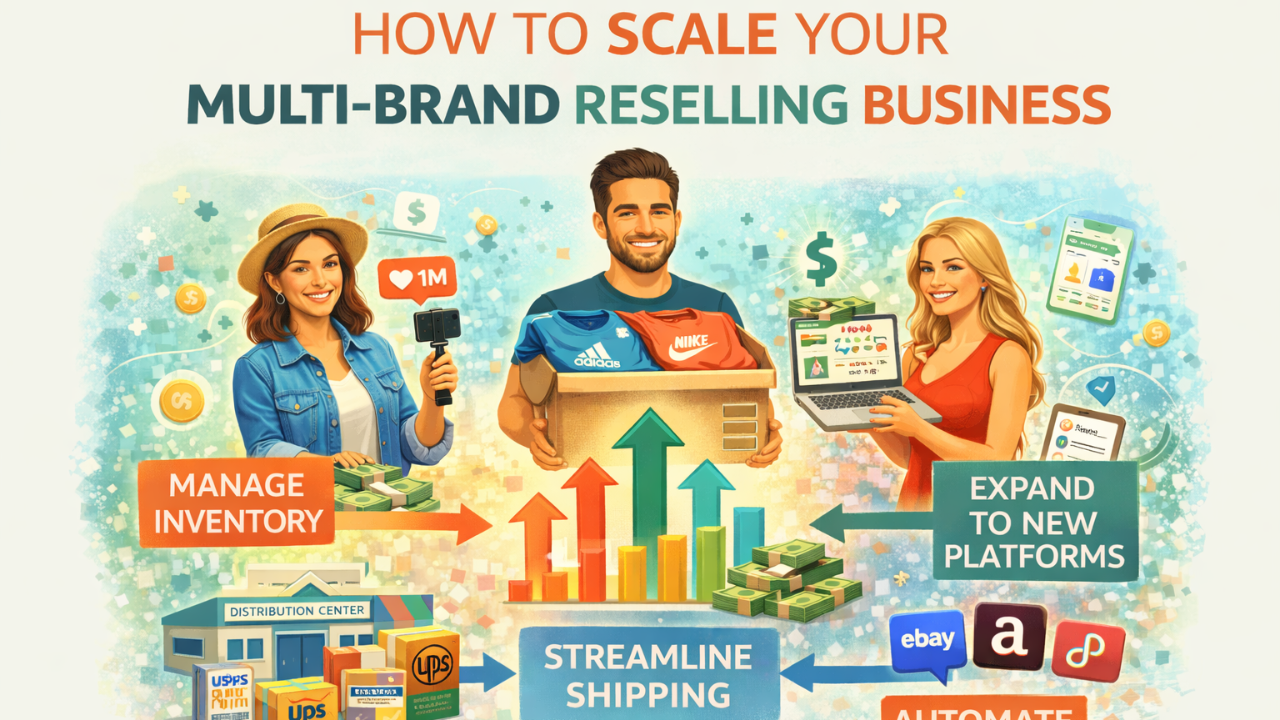
As order volume increases, operational efficiency becomes critical. Delays, errors, or poor customer service can quickly damage reputation and limit growth.
Investing in inventory management systems, reliable shipping partners, and streamlined workflows reduces friction. Automation tools can handle repetitive tasks, allowing you to focus on strategic decisions.
Efficient operations create a seamless experience that encourages repeat business and positive reviews.
Strengthening Your Online Presence
Your digital presence is the storefront of your reselling business. A professional website, active social media profiles, and engaging content create credibility.
Content marketing plays a significant role in scaling. Product showcases, tutorials, styling ideas, and customer testimonials help potential buyers visualize how items fit into their lives.
Search engine optimization ensures your store appears when people search for relevant products. Visibility drives traffic, and traffic drives sales.
Using Data to Guide Growth Decisions
Scaling without data is like navigating without direction. Tracking metrics such as sales trends, customer behavior, and product performance reveals what works and what does not.
Data can inform pricing adjustments, marketing strategies, and inventory planning. It also helps identify high-value customers and opportunities for upselling.
Successful resellers treat analytics as a decision-making tool rather than an afterthought.
Creating Exceptional Customer Experience
Customer satisfaction fuels long-term growth. Fast responses, easy returns, secure payments, and thoughtful packaging contribute to a positive experience.
Satisfied customers become repeat buyers and brand advocates. Word-of-mouth recommendations remain one of the most powerful marketing channels.
Scaling should enhance customer experience, not compromise it.
Diversifying Sales Channels
Relying on a single platform can limit growth potential. Expanding to multiple channels, such as marketplaces, social commerce, and direct-to-consumer websites, increases reach and resilience.
Each channel may attract different customer segments, providing new opportunities for revenue.
Diversification also protects your business from platform-specific risks or policy changes.
Thinking Long-Term About Sustainability
Rapid growth is exciting, but sustainable scaling requires balance. Overexpansion without proper systems can strain resources and damage reputation.
Focus on steady progress, financial discipline, and adaptability. Market trends change, consumer preferences evolve, and competition intensifies. Businesses that remain flexible are better equipped to navigate uncertainty.
A long-term perspective transforms scaling from a risky leap into a calculated journey.
Final Thoughts
Scaling a multi-brand reselling business is both challenging and rewarding. It requires moving from a small operation driven by effort to a structured enterprise guided by strategy.
Strong brand partnerships, clear identity, efficient operations, and effective marketing form the pillars of sustainable growth. Influencer marketing adds a powerful layer by connecting products with audiences through trust and storytelling.
Success does not happen overnight, but with consistent improvement and customer focus, a reselling business can evolve into a thriving brand ecosystem.
Growth is not just about selling more — it is about building something that lasts.